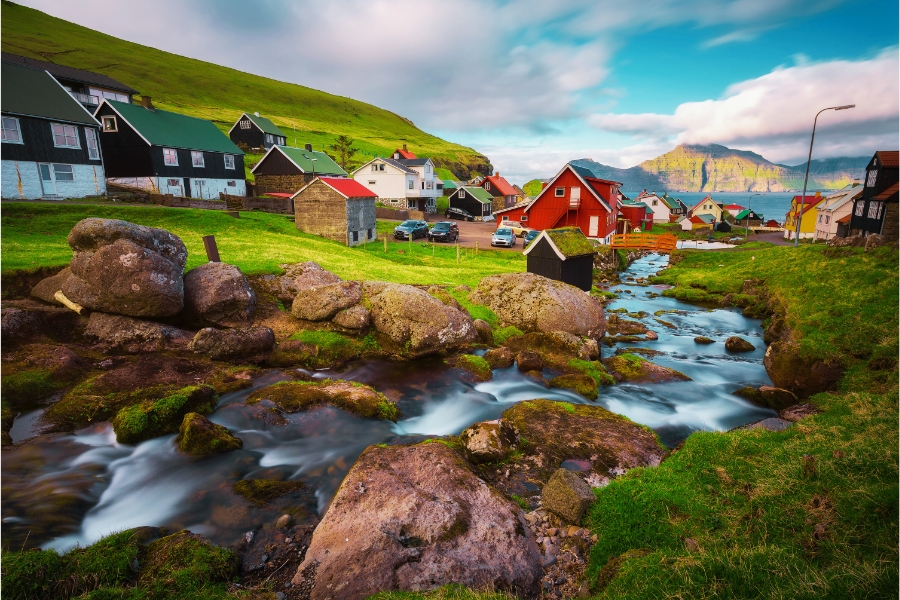
Gjógv is a remote village built around a natural sea gorge on northern Eysturoy. Green slopes and dark cliffs surround colourful homes beside the North Atlantic. When visiting Gjógv, booking a rental car makes the journey easier because rural buses run less often.
The village feels isolated, but paved roads, bridges, and tunnels make it easy to reach by car. You can combine Gjógv with Eiði, Funningur, and Slættaratindur during a longer road trip across northern Eysturoy. Our guide covers Gjógv’s history, airport route, tunnel tolls, driving, parking, sights, and walking trails.
Gjógv combines coastal geology and fishing history within a small setting. Explore quietly because private homes are part of the community.
Gjógv is often described as a seaside village in the Faroe Islands. However, mountains close around the homes while the gorge opens towards the Atlantic. This enclosed setting gives the village a rare shape.
The harbour, church, memorial, stream, bridges, and lanes are close together, so you can see the main sights without rushing. Longer mountain walks begin nearby. This mix of peace, heritage, and easy walking makes Gjógv one of the hidden gems in the Faroe Islands.
Gjógv takes its name from the Faroese word for a gorge or cleft. Its 200-metre sea-filled gorge once gave small fishing boats a sheltered landing place. Crews entered during safe conditions and pulled boats above the surf.
The village has written records dating from at least the sixteenth century. Fishing and sea transport supported local families before reliable roads arrived. The ramp, boathouses, and access points show how residents worked beside the sea. You can also read this history through the village layout. Homes face narrow lanes, the stream, and routes leading towards the gorge. The settlement grew around shelter, water, and workable land.
High peaks, green valleys, basalt cliffs, waterfalls, and open water surround Gjógv. Light and visibility change quickly as rain, fog, and wind cross the slopes. Kalsoy’s sharp outline may appear across the sea during clear weather. Gjógv has limited shops, seasonal food services, and fewer facilities than larger Faroese towns. Bring water, snacks, warm layers, and medicine. Check opening times before, depending on the café or guesthouse.

The airport route crosses Vágar, Streymoy, and Eysturoy. Fog, tunnels, and mountain roads can change your timing, especially near the final descent.
You should rent a car in the Faroe Islands when visiting Gjógv as part of a longer road trip. A compact car works well on narrow roads. Families carrying more luggage may choose an estate car or medium SUV.
Choose enough luggage space to keep bags below the windows. Before leaving, check the windscreen, tyres, insurance excess, and handover steps. Four-wheel drive can improve traction during heavy rain or on wet, steep roads, but you should still slow down in strong winds.
When you book online with Final Rentals, you can compare compact cars and premium SUVs with unlimited mileage. Your booking also includes CDW, THW, and TPL cover.
The road distance is about 72 kilometres from Vagar Airport. Driving takes slightly over 1 hour without stops. Plan 70 to 90 minutes for weather, sheep, roadworks, and slower traffic.
Follow signs through Vágatunnilin to Streymoy, then continue north towards the Sundini channel. Cross the Streymin bridge to Eysturoy. This route usually avoids the longer Eysturoy subsea tunnel.
Tunnel cameras record number plates, so there is no normal toll booth. Car rental companies may use packages or itemised billing. Ask how tunnel charges appear and keep the final receipt. Use reliable navigation and download an offline map. Check road conditions and the weather camera in Gjáarskarð before your drive. Stop only in signed parking areas and keep passing places clear.
The Gjáarskarð approach has sharp bends and sudden fog. Slow before corners and expect sheep on the road. Brake gently and report any collision with livestock to the Faroese police.
Keep your headlights on in daylight and at night. Use passing places only when meeting traffic. The nearest driver may need to reverse carefully. Park near the village entrance, then continue on foot. Do not block homes, farm gates, turning spaces, or emergency access. Hold each door in strong wind and take valuable equipment with you.
You can see the main village sights within 2 to 3 hours. Staying longer needs better weather for exposed coastal walks and mountain routes.

Follow the surfaced path towards the old boat ramp. The gorge can carry powerful waves deep into the village. Wet stone, foam, and spray make the area slippery during rough weather. Use higher ground for wide views of the channel, village, and slopes. Protect camera lenses from salt spray. Keep children close because there are exposed drops near some paths.
Gjógv Church opened in 1929, and its inauguration took place in Faroese. Across the road, a memorial shows a mother and children facing the sea. It remembers the local people lost offshore.
The central stream, small bridges, turf roofs, and colourful homes create quiet views beyond the gorge. Common house colours include red, black, white, and green.
You may photograph buildings from public roads and paths. Do not enter gardens, lean on fences, or move objects. Keep tripods away from narrow lanes, especially when there are locals. Turf roofs provide insulation and blend with the slopes. Other homes use corrugated roofs designed for wet and windy conditions.
The Ambadalur trail rises from Gjógv towards a coastal valley. Walking usually takes 60 to 90 minutes each way. The route offers views of Búgvin, a 188-metre sea stack.
Wear supportive boots and carry water, food, gloves, waterproof clothing, and offline navigation. Stay on marked paths and avoid nesting burrows. Turn back when fog, strong wind, or rain removes safe visibility.
The historic Funningur path covers about 4 kilometres and takes around 1 hour and 20 minutes. Cairns mark higher sections, while Kirkjusteinur and Líksteinur recall church journeys and funeral processions. This medium route can begin in either village, though parking is better in Funningur. Plan return transport before starting. Rural buses run less often, and land access rules may change.
When visiting Gjógv, spend more than a few minutes taking photos before moving on. The gorge reveals Gjógv’s fishing past, while the church and memorial share the risks of living beside the Atlantic. Plan your route carefully, especially when driving narrow roads or walking along exposed coastal paths.
Rent a car in the Faroe Islands with Final Rentals, and you can enjoy unlimited mileage and included insurance cover. You can also take the car on permitted ferries, making it easier to explore more islands. Book and manage your car rental at any time. Download the Final Rentals app on Google Play and the App Store.
Plan 2 to 3 hours for the village. Your available time, walking distance, weather, photography stops, and safety buffer affect the visit. Add 3 hours or more for a mountain hike. The drive to the airport usually takes about 70 to 90 minutes each way. Start early when you plan a walk, especially during shorter daylight hours.
A rental car gives you greater flexibility than rural buses. It also carries wet-weather gear during changing conditions. Public transport reaches the area, but services can be infrequent. A car is usually easier for a day trip from Vágar Airport. It also helps you include nearby villages, viewpoints, and safe stops during the same journey.
Start with the natural gorge and church, then visit village lanes, coastal viewpoints, and the historic memorial within 2 hours. Longer visits can include Ambadalur or the old Funningur path. Both require proper footwear, clear weather, and careful route planning. You should also leave time for the stream, bridges, turf roofs, and safe photography from public paths.