The Faroe Islands have a small North Atlantic transport system with three main parts: roads with many tunnels, scheduled buses, and domestic ferries that work like moving bridges between islands. There are no trains, so your daily plan is built around road access plus fixed departure times.
When exploring the Faroe Islands, renting a car gives you the freedom to travel at your own pace, while public transport requires planning around fixed schedules. Our guide helps you choose based on your trip length, your comfort with driving in wind and tunnels, and what you want to explore.
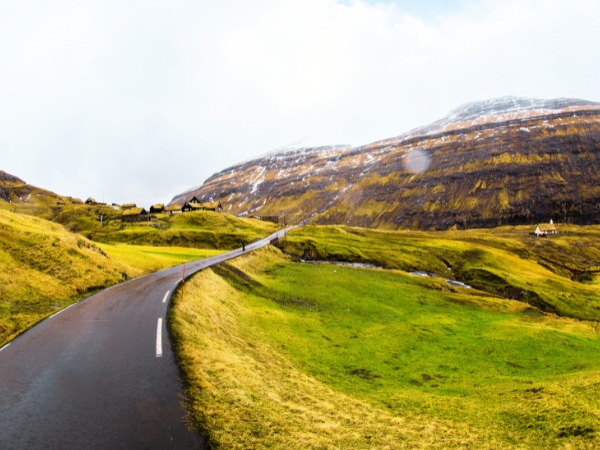
The Faroe Islands are known for dramatic cliffs, small villages, and fast-changing weather. For travellers exploring the Faroe Islands, the landscape is part of the appeal, but it also affects how easily you can move from place to place. Because the islands are long and narrow, many nearby places are separated by water, fjords, steep mountains, or single-lane roads.
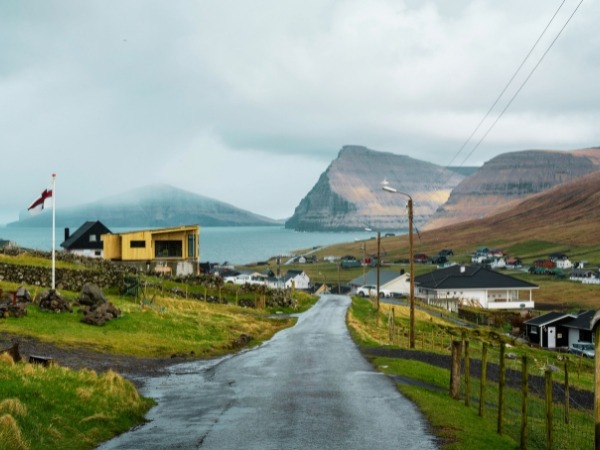
A good plan in the Faroe Islands is often a network plan. You match a road leg with a tunnel, then match that with a ferry departure or a bus connection. If you miss one link, you can lose hours, especially on routes with only a few services.
Because the population and attractions are spread across multiple islands, you often need either a subsea tunnel crossing or a ferry crossing to complete a route. Even when you stay on one island, fjords and mountains can make the road route longer than you expect on a map.
The Faroe Islands have a cool maritime climate. Summers are cool, averaging around 12°C, and winters are mild, averaging around 3°C, but conditions can still feel demanding because wind and rain are common.
Winter driving conditions should always be checked in advance, and some tourist routes do not receive winter maintenance, including salting or snow removal. This is where weather and timing matter most: a safe plan is flexible, and it helps to have a backup place to visit near your base in case conditions change.
Some popular places are easy with either option, especially near Tórshavn and along the main routes. However, famous smaller places often sit on narrow side roads, require a bus transfer, or can only be reached by a ferry and a local bus.
There are even day-trip routes that combine bus, ferry, and a hike, such as reaching Kalsoy: bus to Klaksvík, then ferry, then bus on the island. With a car, you can often start earlier for hikes and stop at viewpoints without waiting for a timetable.
Car travel in the Faroe Islands is built on paved roads, bridges, and tunnels, including older one-lane tunnels with passing bays, often called turnouts, that require active yielding. Unlike bus travel, driving is not constrained by timetable frequency. Instead, it is constrained by parking, toll charges in subsea tunnels, and your confidence in local conditions.
If your priority is flexibility while exploring the Faroe Islands, a rental car lets you leave before the first bus, return after the last bus, and stop for photos without worrying about the next connection.
Driving also helps you reach remote places and trailheads. Some village roads and tunnels can be single-lane, so a car gives access but also asks more from you as a driver. You need to yield correctly and drive slowly when visibility is low.
Older tunnels can be one lane with turnouts about 100 metres apart. Drivers should also keep the lights on and the seatbelts fastened. Subsea tunnels are toll roads, and your licence plate is registered automatically. You then pay using one of the accepted payment methods, and online payments must be made within 6 days. Otherwise, an extra fee may apply.
If your rental car is Faroese-registered, you usually need to pay the rental company for tunnel trips. For parking, public parking in towns is often disc parking: it is free within a time limit, and you must set a parking disc to show when you parked. Blue plaques show how long you can stay.
For example, renting a small car in the Faroe Islands can cost around DKK 651 per day, while a compact SUV can cost around DKK 830 per day, before fuel and other charges. Prices vary by season and supply. Costs add up quickly once rental, fuel, and extra charges are included.
Public transport in the Faroe Islands is a combined system of regional buses and domestic ferries, coordinated mainly by SSL, plus local city buses in Tórshavn. Planning is timetable-based, so you will use route numbers and fixed departure times. Public transport can work for exploring the Faroe Islands if your route follows the main corridors and you are comfortable planning.
If you are focused on simply getting around the Faroe Islands, public transport can be good, especially on the main corridors. The system includes large blue buses connecting the airport, Tórshavn, and larger towns, plus smaller buses and ferries for remote routes.
In Tórshavn, the local red city buses are free to use, and they accept wheelchairs and prams. Bicycles are allowed after 5 pm, provided the space is needed first for wheelchair users or prams.
The main limit is frequency. Some routes, including journeys to Tjørnuvík via Oyrarbakki, can have low bus frequency, so planning is essential. On some lesser-used regional routes, advance request is needed, and the timetable will normally show this. Low-frequency changes everything, as a missed bus can reshape the whole day.
Another limit is that some ferries are capacity-limited and use booking systems. Several island ferry routes, including those to Suðuroy, Mykines, and Kalsoy, use this approach. Booking is recommended because booked vehicles and passengers have priority to board and usually receive a better price. If you simply turn up, you are not guaranteed a seat and may pay more at departure.
Public transport is best when you travel with a flexible mindset, especially if you are a solo traveller who would rather not drive in tunnels and strong winds. It also suits slow travel, where you focus on a few areas instead of trying to cover every island in a short time..
Exploring the Faroe Islands is less about choosing the right way to get around and more about choosing freedom or flow. A car lets you make the most of shifting weather and daylight, linger in quiet villages, and explore without limits. Meanwhile, public transport invites you to slow down, plan with intention, and see the islands at a gentler pace.
Rent a car in the Faroe Islands to make the most of your time, especially if you want to reach remote places and travel on your own schedule. Select your pickup location, enter your travel dates, and choose a vehicle for your trip. Book and manage your car rental at any time. Download the Final Rentals app on Google Play and the App Store.
If you want remote stops and early starts, a car is usually the better choice. However, you must be comfortable with one-lane tunnels, tolls, and parking rules. If you prefer a lower-stress trip and your route fits the main corridors, buses, and ferries, it can work very well with the travel card. For shorter trips with sightseeing plans, a car usually offers more reach in less time, while public transport works best for slower, more focused itineraries.
A travel card for adults at 500 DKK and a 7-day travel card for adults at 700 DKK, with child prices at half price. Some routes and services have separate fares, and Mykines on Route 36 is not covered by the travel card.
Bus routes are number-based, and planning tools such as the Ferðaætlan route planner help you match buses and ferries without needing complex language skills. In Tórshavn, the local city buses are free and can also be checked with map tools for simple navigation.