Finalrentals Blog


Published in Explore Category.
The Faroe Islands are a place you don’t visit for straight roads and fast miles. It’s a compact North Atlantic landscape where volcanic ridges, sea cliffs, small villages, bridges, and subsea tunnels are close together. Renting a car can take you from a tidal lagoon to a surf beach, then on to a sea gorge or a cliff-edge waterfall in a very short distance.
Our guide will help you plan the best coastal drives in the Faroe Islands. It covers routes like the Saksun and the Streymoy, along with key tips for the journey.
Best Coastal Drives in the Faroe Islands for Ocean Views
In the Faroes, the last few kilometres into famous villages often include narrow access roads, older tunnels, or passing places. So, you should think in short scenic segments, not in long high-speed runs.
1. Streymoy to Eysturoy Route Highlights

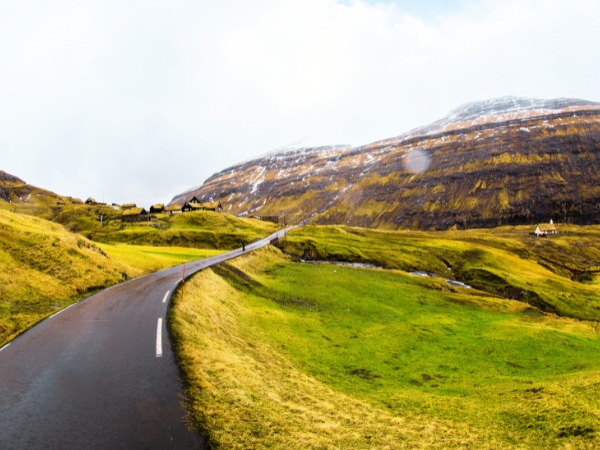
For a classic Streymoy coastal road day, head north on Streymoy and use Oyrarbakki as your branch point for the west-facing village roads. The Saksun coastal drive works best as a slow out-and-back detour. The route runs through a 10-kilometre valley past Saksunarvatn and ends at Saksun. Here, the village sits in a natural amphitheatre above the tidal lagoon Pollurin.
At low tide, sand opens around the lagoon. If you continue towards Tjørnuvík, you reach a sandy beach with a direct view of Risin and Kellingin. However, these routes aren't ideal for larger vehicles because the approaches are narrow and summer traffic can be heavy.
From there, you can keep the day going into Eysturoy. Eiði gives you access to views towards the Giant and the Witch, Funningur sits below Slættaratindur, Hvíthamar offers a short panoramic walk above the fjord, and Gjógv is built around a 200-metre sea-filled gorge that runs from the village into the ocean. If you want to shorten the transfer between the two islands, the 11.2-kilometre Eysturoy subsea tunnel links Streymoy and Eysturoy and includes the world’s first undersea roundabout.
2. Vágar Island Coastal Roads and Hidden Gems

Vágar offers one of the best short, scenic loops in the islands. About 5 to 20 minutes from the airport, you can link Bøur, Gásadalur, and the lake-and-ocean edge around Sørvágsvat. Bøur looks out towards Tindhólmur; Gásadalur is reached via a mountain tunnel, and the Múlafossur lookout is only about a 5-minute walk from the car park.
For a second stop, use the trail area around Sørvágsvatn or Leitisvatn. From one angle, the lake seems to float above the sea, which is why many travellers know it as “the lake above the ocean”, and at the far end, Bøsdalafossur drops about 30 metres directly into the Atlantic. If you want an extra west-coast extension, the Drangarnir area is not a casual roadside wander. This landscape requires landowner permission and guided access.
3. Northern Isles Drives With Dramatic Cliffs
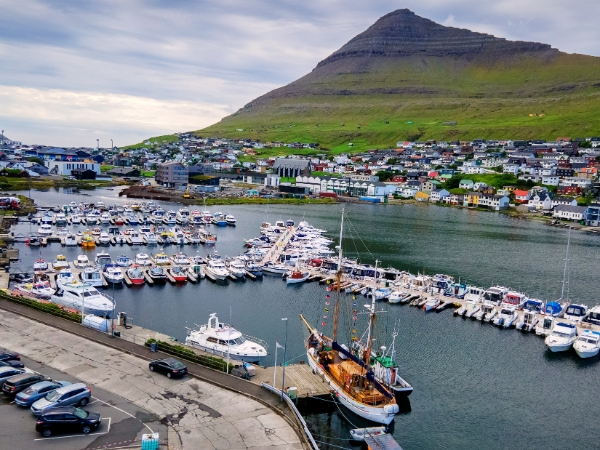
The Northern Isles route is steeper and more exposed than many central-island drives. You enter through the 6.2-kilometre Norðoyatunnilin to Borðoy and Klaksvík, then continue by causeway to Kunoy and onward to Viðoy and Viðareiði. There is a mountain tunnel to access Kunoy. From Vágar Airport, this route is drivable via a continuous network of tunnels, bridges, and causeways. The drive typically takes around 1.5 to 2.5 hours one way.
This is the best route if you want pure cliff-and-ocean scenery. Kunoy’s ridge rises from 444 to 830 metres, while Cape Enniberg on Viðoy stands 754 metres above the sea. Viðareiði is one of the most striking villages in the Faroe Islands, and the roads around it give you broad Atlantic views with very little visual clutter.
Road conditions add to the sense of exposure. Mountain sections can be steeper, weather can shift quickly with fog and wind, and some tunnels are single-lane with passing bays. Despite this, the route is fully accessible by standard vehicles, though it is best planned as a full-day or overnight trip rather than a quick out-and-back.
What Makes the Faroe Islands Coastal Drives Unique
These drives are not just scenic, but they are also structurally unusual. The roads respond to steep topography, old village placement, and constant ocean exposure, so you see how geology, exposure, visibility, birdlife, and settlement all affect the same short route.
Landscape Features
The Faroe Islands are volcanic and dominated by basalt, and cliffs make up most of the coastline. That creates the famous Faroese shape: tiered mountains, narrow inlets, sea stacks, and road ledges with the sea on one side and rock on the other. On one drive, you can move from Saksun’s tidal lagoon to Tjørnuvík’s open-ocean beach, then on to Gjógv’s sea gorge and waterfalls such as Múlafossur or Bøsdalafossur that spill towards the sea.
Changing Weather and Light Conditions
Summer usually offers the most stable conditions and the longest daylight hours. However, the weather can change very quickly, with fog, rain, and strong winds affecting travel to the smaller villages.
Wildlife Encounters Along Coastal Roads

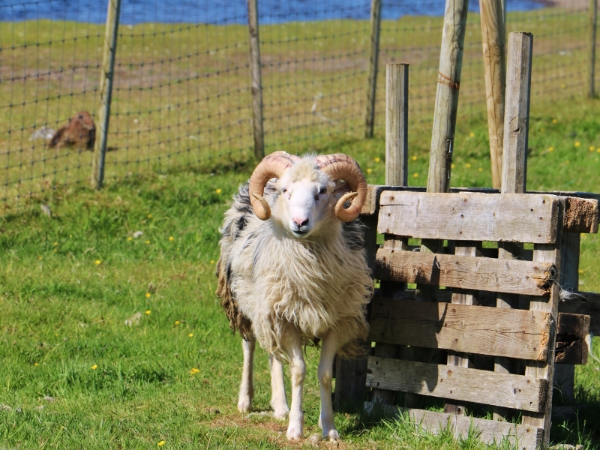
Wildlife is one reason these drives feel alive. The Faroe Islands are an important seabird destination, highlighting birds such as puffins, kittiwakes, and gannets. Seals may be seen year-round along sheltered coasts. On land, your most common road encounter is sheep.
Essential Tips for Planning a Coastal Drive in the Faroe Islands
Planning becomes easy once you focus on the right variables. For coastal drives in the Faroe Islands, your day depends on seasonality, surface, tolls, parking, and layers more than on pure distance, because narrow roads and fast weather changes can quickly alter your pace. Think like a careful driver first and a photographer second.
Best Time for Coastal Road Trips
Late spring to early autumn is the easiest window for a road trip, because summer generally brings the most stable weather and the longest daylight. You can still drive in winter, but you need to accept shorter days and greater road-weather risk; Landsverk also warns that some tourist routes, including Eiðiskarð and the old Viðareiði road, do not receive winter maintenance, salting, or snow removal.
Car Rental from Vagar Airport
If you’re starting your drive from Vágar Airport, renting a car is the most practical option, especially for reaching smaller coastal villages where public transport is limited.
For Faroe Islands roads, vehicle size matters more than power. Compact or small cars are often the easiest to handle on narrow lanes, single-track roads, and tight village turns. Medium cars offer a bit more comfort for longer drives, while SUVs can be useful if you prefer extra ground clearance or plan to explore more rugged areas, though they’re not strictly necessary for most coastal routes.
Car rental platforms like Final Rentals make it easy to compare vehicle types (small, medium, SUV) and filter by transmission, seating, and features. Most rentals include essentials such as unlimited mileage, theft protection, and collision damage waiver, which are valuable given the unpredictable weather and changing road conditions.
Pricing typically falls within a moderate daily range depending on vehicle category, with smaller cars being the most budget-friendly and SUVs at the higher end. Booking in advance is strongly recommended, particularly in summer when demand peaks.
Takeaway
If you want a road trip that feels genuinely different, coastal drives in the Faroe Islands deliver that rare mix of engineering, geography, and quiet beauty. The Saksun coastal drive, the wider Streymoy coastal road detours, the west-coast loop on Vágar, and the cliff-heavy Northern Isles all show you the same Faroese truth in different ways.
Rent a car in the Faroe Islands with Final Rentals to navigate coastal routes with unlimited mileage, winter-ready vehicles, and built-in insurance coverage. Book and manage your car rental at any time. Download the Final Rentals app on Google Play and the App Store.
Frequently Asked Questions
Do you need a 4WD for the Faroe coastal roads?
No. Most main roads, bridges, and subsea tunnels are suitable for normal passenger cars. However, a smaller car is often easier on village approaches such as Tjørnuvík. Here, larger vehicles are discouraged, and some narrow-road villages do not allow camping cars.
What to know before renting a car for coastal drives in the Faroe Islands?
When planning coastal drives in the Faroe Islands, choose a compact rental car for easier handling on narrow roads such as the Saksun coastal drive and the Streymoy coastal road. Be prepared for single-lane sections, passing places, and older tunnels where right-of-way rules apply. Check with your rental company about subsea tunnel tolls, as they are often automatically registered.
What should you watch for on Saksun and Streymoy roads?
Watch for narrow access roads, passing places, sheep, and sudden changes in visibility. Headlights are required at all times, you must not park in lay-bys, and in older one-lane tunnels, you give way when the turnout is on your right.