Driving in the Faroe Islands is a unique adventure. These North Atlantic Isles have more sheep than people, with around 70,000 free-roaming animals. As you rent a car in the Faroe Islands, remember that livestock often shares the road with you. Unlike fenced pastures, Faroese sheep wander across hillsides and valleys, so you must stay alert. This guide explains where you’ll meet the most sheep in the Faroe Islands, how to drive safely among them, and what to do if you collide with one.
Sheep grazing areas often run right up to rural roads. On certain routes, you’ll see them particularly often. The following roads are known for sheep crossings and grazing fields.
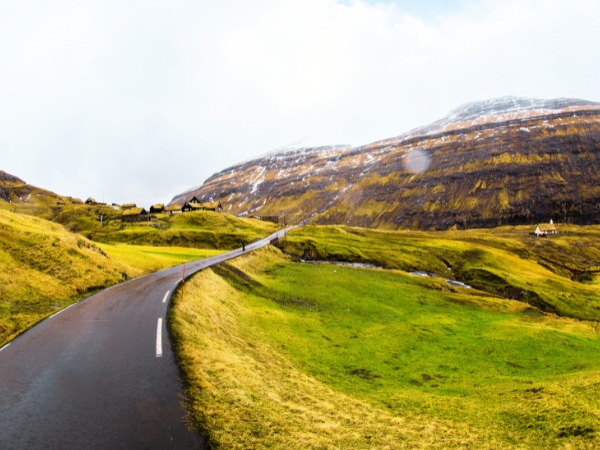
The narrow mountain road from Hvalvík into Saksunardalur Valley is a classic place to meet sheep. The road hugs steep slopes on both sides, with green pastures sloping down to the tarmac. You may see sheep in the Faroe Islands' valleys standing close to the roadside.
The road approaching the village of Tjørnuvík is also narrow and winding. It climbs along the coast with sharp curves and rises that block your view ahead. Open grazing land is close by on the hills, so sheep frequently wander onto this one-lane road.
The tight bends mean you may not see sheep until the last moment. Always slow down and sound your horn gently if needed. Limited visibility around each bend means a sheep standing just out of sight could step onto your path. Keep the speed down and be ready to stop quickly if an animal appears.
You will often see sheep in the Faroe Islands in villages such as Gjógv, Funningur, and Eiði. The roads here wind through steep valleys and pass high, open pastures on either side. Often, the mountain slopes drop sharply to the road, and sheep may graze at the roadside. Look out for animals on crests and curves. In this area, sheep will sometimes stand in the road or sun themselves on blind corners.
Between Sørvágur, Bøur, and Gásadalur on Vágar island, the road climbs through farmland and cliffs. It winds past bends and a one-lane tunnel into Gásadalur. In Bøur, the road is very narrow, with steep drops at the edge. Grass fields on the slopes are full of grazing sheep. On this route, you share the road with livestock near every corner. The old mountain road to Gásadalur, now closed, was famous for sheep unexpectedly blocking the way.
Now, even though part of the route is a tunnel, sheep often wait by the road’s edge before and after the tunnel. Respect single-track sections and use passing bays as needed. Always stay aware that sheep may come out from behind the tunnel or around a bend.

When you see sheep ahead, take extra care. The Faroese landscape is beautiful, but it can be hazardous if you go too fast. Here are some key tips for safe driving around sheep.
Whenever you spot sheep in the Faroe Islands' grazing areas near the road, slow down well before you reach them. Reducing your speed early gives you a much longer stopping distance and better control. For example, on wet pavement, your braking distance can more than double.
Never assume one sheep on the road is alone. Sheep move in flocks, so if you see one crossing, others are likely close behind. After the first sheep passes, watch the flanks of the road because more animals may dash out from the grass. Always scan both verges for stragglers before you drive off.
Keep a safe distance when passing animals. Never try to squeeze by a sheep on a narrow road if you have to rush past it. Driving too closely or honking can startle a sheep, causing it to run sideways or jump unexpectedly. Instead, wait until the road is wide enough or a passing place appears. Keep at least a car-length gap, and pass slowly if you must. Slow engine noise and gentle movements reduce the chance that the sheep will bolt.
Blind corners and hill crests are especially risky when driving near sheep in the Faroe Islands' rural areas. You may not see a sheep until you are almost on top of it. When approaching the top of a hill or a sharp turn, reduce speed even more. Stay far to the middle of your lane where safe, so you have more space to brake or swerve. In bad weather or fog, visibility drops and stopping distance increases, so cut your speed further.
Many Faroese roads are single-lane with pullouts, also known as passing bays. On these narrow stretches, your options are limited if sheep appear. Slow way down when you enter a single-track section, even if no sheep are in sight yet.
If you encounter sheep in a one-lane tunnel or narrow road, stop until they move. Always use a passing bay to wait rather than trying to pass on the narrow road.
If you plan to cover several islands, book your Faroe Islands car with Final Rentals for unlimited mileage and winter tyres. Collision Damage Waiver, Theft Waiver, and Third Party Liability are also included. You can choose the car category that fits your narrow-road, tunnel, and island driving plans.

If you collide with sheep in the Faroe Islands, follow these steps.
Immediately pull over safely, out of the flow of traffic. Turn on your hazard lights to warn other drivers. Park on the verge or at the next lay-by if possible, but do not stop in the middle of the road.
Check that you are visible to approaching vehicles. By law, you must stay at the scene of the accident. Make sure your own vehicle is secure by using wheel chocks or applying the brakes. Keep calm and exit your car carefully, watching for oncoming traffic.
Legally, you must report any collision with a sheep to help the owner get insurance compensation. Be prepared to give details about the time, road name, and circumstances. Stay at the scene until the police arrive or confirm it’s been logged. Leaving the site without reporting is considered a serious hit-and-run offence.
After notifying the authorities, inform your car rental company about the collision. They will guide you through the incident reporting process. Follow the instructions in your rental agreement. Your rental company may have a partner garage or an accident procedure. Provide all documentation, including the police report, photos, and witness contacts, as required. Ask whether they arrange repairs or towing if the car cannot continue to be driven safely.
Document everything for the police, and take clear photos of the scene. Include any road signs or landmarks so the location, road number, or nearest village is obvious. Photograph both the sheep, if possible, without moving the body, and your vehicle’s damage from multiple angles. Note the time of day and road conditions, such as wet or dark roads.
Once you’ve reported the incident and recorded details, check your vehicle carefully before continuing. Inspect the tyres for punctures, make sure all lights and indicators still work, and look under the hood for any fluid leaks. Check that the wheels aren’t misaligned and that steering is responsive. Small body damage, such as a dented bumper, may not be critical, but severe impacts could affect vehicle control.
If anything looks unsafe, such as leaking oil, a broken suspension, or a glaring light failure, do not drive. Call your rental company or a local tow service. If the car seems drivable, proceed slowly to the nearest town or your destination. Report any remaining concerns immediately.
Driving among sheep in the Faroe Islands' landscapes shows you something important about travelling here. These roads pass through working farmland, villages, and grazing areas rather than separate tourist zones. The sheep are part of the place, not an obstacle to it.
Rent a car in the Faroe Islands with Final Rentals to plan ferry crossings and early starts around your route. Ferry travel is permitted under the rental terms. You can choose the optional Vágar and Norðoyar tunnel subscription when booking. Book and manage your car rental anytime. Download the Final Rentals app on Google Play and the App Store.
Much of the land is open grazing pasture, and sheep roam freely from spring through autumn. They don’t know how to stay out of the way of cars, so it’s very common to see sheep and lambs on country roads. Local drivers always expect sheep to have the right of way, so they slow or stop whenever an animal crosses.
First, stop immediately and turn on your hazard lights. Faroese law requires you to report the collision to the police right away. Do not drive off, as that would be a hit-and-run offence. The good news is you will not be held financially responsible for damage to the sheep. After reporting, contact your rental company to notify them and proceed with any necessary paperwork.
Always drive slowly in rural areas. Slow down before bends or up ahead of grazing fields so you have time to brake if a sheep steps out. Expect that if one sheep crosses, more may follow. Give sheep plenty of space when passing, and avoid startling them. Stay vigilant on single-lane roads and use passing places wisely. If a sheep blocks the road, wait patiently for it to move.