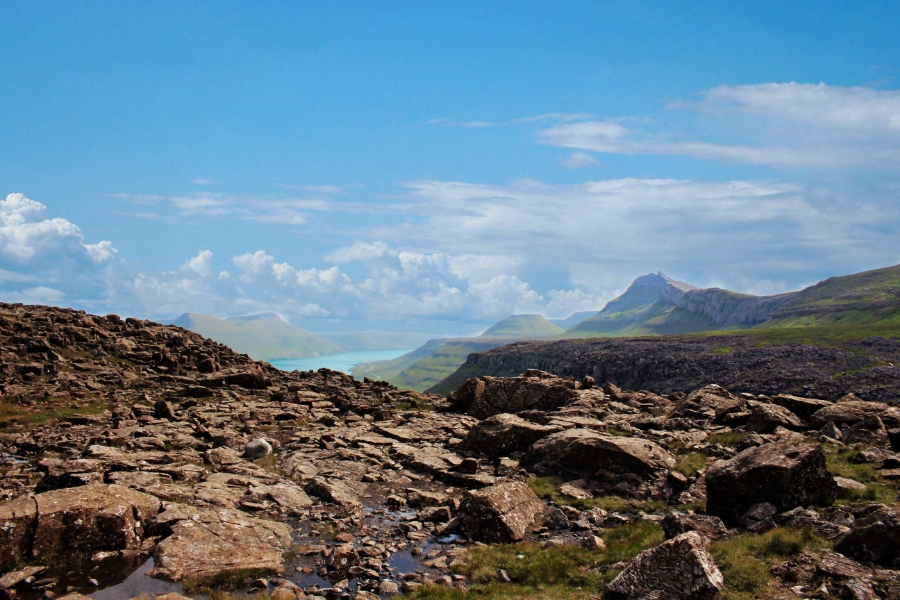
Planning a trip to the Faroe Islands often includes renting a car to move between islands, villages, and remote viewpoints. The landscape may look open and wild, but road access is structured, and most routes are for standard vehicles using maintained roads, tunnels, and bridges.
If you’re driving in the Faroe Islands, it is important to understand what “off-road” driving means. While the scenery includes open grassland, steep hills, and coastal cliffs, leaving marked roads is not allowed. Even short detours for photos or viewpoints can fall under restricted access.
Our guide explains what off-road driving actually means in the Faroes, what is legally allowed, and how to plan routes that stay within road access.
In the Faroe Islands, what matters most is the type of road. You should only drive on public roads, even if some parts are gravel and use the small pull-out areas to let other cars pass. Do not drive off the road onto paths, fields, or beaches.
If the route lacks a road number or is clearly a private track, treat it as off-road and avoid driving there. Any damage in these areas is usually considered the driver’s responsibility, especially on surfaces such as paths, beaches, or open land.
Driving onto grass near a viewpoint, onto a farm track, across a field gate, or along a dirt path used by walkers can all be considered off-road use. Even if the ground looks firm, it is still not a proper road, and this is where both legal and financial risks begin.
The Faroe Islands are not empty land. Much of the landscape is working countryside, and access is more restricted than in areas with a right-to-roam system. An example is the camping rules, which require visitors to use designated campsites rather than stopping anywhere.
From an environmental perspective, the ground is often soft and sensitive. Driving across it can cause erosion and damage vegetation, especially in a cool and wet climate where recovery takes a long time. A vehicle can leave lasting marks in just minutes, which is why the land is treated as fragile.
Rental contracts are written for normal roads, not adventure tracks. Your coverage, your deposit, and your personal liability are all linked to how and where the vehicle is driven.
Many renters assume that paying for insurance coverage means they are fully protected. In reality, many protection packages include important exclusions, especially in the Faroe Islands.
Damage to the underbody, chassis, or transmission, as well as damage linked to off-road driving, is often not covered and becomes the driver’s responsibility.
It is also important to understand how rental companies define off-road use. This can include turning around on a rough surface, driving through water, or scraping the underside of the car on an uneven track. If a route does not appear to be a proper road, it is safer to check a map before driving.
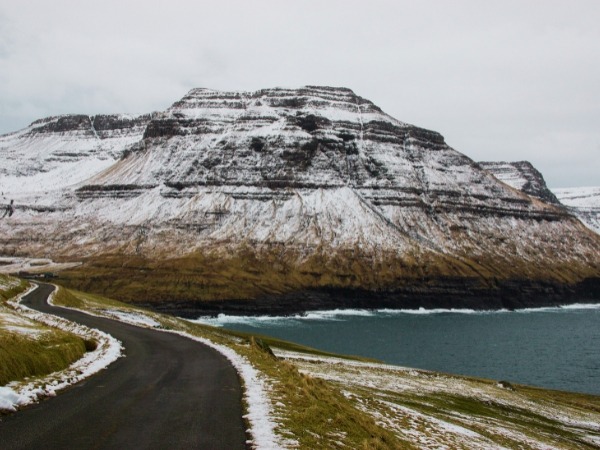
The road network is designed to reach villages, harbours, and many famous viewpoints using normal cars. If you build your plan around official routes, you can still get the “wild” feeling.
For scenic travels, the islands have official tourist routes known as Sóljuleiðir, also called Buttercup routes. These routes are for slow scenic driving and often include single-lane roads with passing places, where parking is strictly prohibited.
If you want adventure, choose drives that feel remote but are on public roads. A simple approach is to combine coastal routes, mountain roads, and a subsea tunnel to enjoy changing scenery without leaving the road network. Some of the scenic routes you can drive are:
Driving in the Faroe Islands is less about where your car can go and more about knowing where it should. Respecting the roads, the land, and the quiet rhythm of the islands will take you further than any off-road detour ever could. Stay on the right paths, slow down when the views call for it, and remember that some of the best moments happen when you park the car and take the last steps on foot.
Rent a car in the Faroe Islands with Final Rentals to enjoy flexible booking, insurance protection, and stress-free driving. Select Vágar Airport as your pickup location, enter your travel dates, and choose a vehicle for your trip. Book and manage your car rental at any time. Download the Final Rentals app on Google Play and the App Store.
Off-road driving in the Faroe Islands is prohibited by law, and you should stay on paved roads. If you want remote scenery, take a tourist route and walk the last part on foot instead.
Not always. Some roads to smaller villages are still gravel roads, and you can drive them carefully as part of the public road network. The key is to avoid tracks that are not proper roads (e.g., paths or beach tracks), as they count as off-road use under rental policies.
Subsea tunnel tolls use number plate registration (a photo of the plate is recorded) and are paid online, not at a booth. Payment must be made within a set number of days, or an invoice and extra fee can be added, so it is smart to ask your rental company how they handle payment.