Most visitors land at Vágar Airport, the only airport in the Faroe Islands. It is about 47 kilometres west of Tórshavn. If you plan to rent a car in the Faroe Islands, you can explore more places beyond the main bus routes.
Still, driving in the Faroe Islands comes with surprises from the first day. Sheep may cross without warning, fog can cover the road quickly, and many routes pass through narrow tunnels or village lanes. Our guide covers what you can expect on routes from Vágar Airport to villages, viewpoints, and Tórshavn.
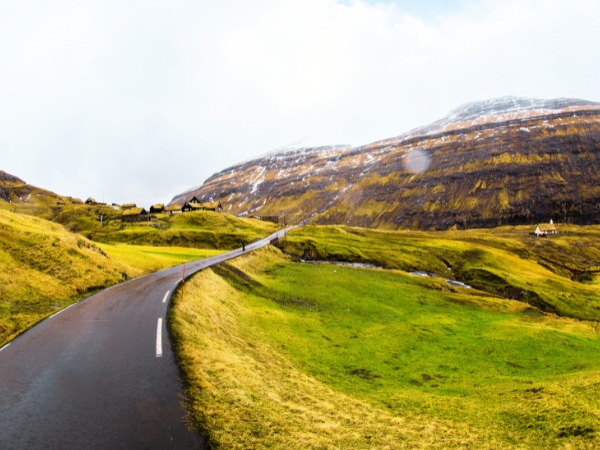
Roads are paved and well-kept, but treat each scenic drive as a working road first. Expect steep ground, small villages, exposed coasts, and weather that can change fast.
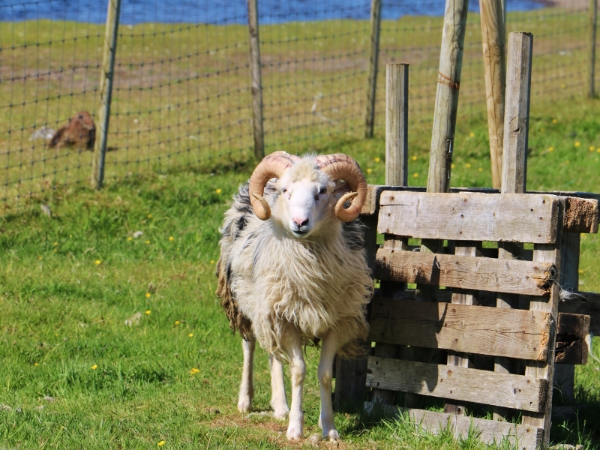
You can encounter sheep after leaving the airport. The drive to Gásadalur starts near Vágar Airport and passes signs for Bøur and Gásadalur. Roads in North Streymoy also lead to quiet places like Saksun. Sheep are a normal part of driving in the Faroe Islands. Slow down early near farms, blind bends, field entrances, and hill crests.
If you hit a sheep, report it to the Faroese Police. This helps the farmer claim through insurance and follows the local process. Never assume an animal will move away. Keep both hands ready, brake gently, and let the sheep clear the road.

Fog is one of the main reasons to leave extra time in your plan. A foggy morning can turn sunny later, and clear weather can change fast outside the capital. You need extra time and space when visibility drops.
This matters near Miðvágur and Gásadalur, where the route climbs through open ground and a narrow tunnel. It also matters on exposed drives near Tjørnuvík and Gjógv. The land rises fast toward the sea there, so cut speed before visibility becomes poor.
Tórshavn is only about 40 minutes from Vágar Airport by car. If this is your first Faroese drive, the route includes a subsea tunnel, changing light, and views that can distract new visitors.
After the Vágatunnilin, you reach Streymoy near Vestmanna. This area becomes your gateway to the rest of the road network. If you land tired, avoid a tight first-day plan with fixed photo stops. A calmer first route helps you learn local road habits.
Good tunnel planning is part of driving in the Faroe Islands from the day you land. Vágatunnilin links Vágar and Streymoy. Norðoyatunnilin links Leirvík and Klaksvík. Eysturoyartunnilin links Tórshavn and Eysturoy, while Sandoyartunnilin links Streymoy and Sandoy.
All four subsea tunnels have tolls. Eysturoyartunnilin also has the world’s first undersea roundabout. With rental cars, payment usually goes through the car rental company, and rates can vary. Ask about billing before your first long drive. You can book a vehicle with Final Rentals for unlimited mileage, winter tyres, and key insurance coverage.
You will not meet single-lane driving on every main road. However, you should expect it on some scenic and older routes. Several tourist routes have passing places, and parking in those spaces is strictly forbidden.
This matters on remote drives and village roads that are smaller than many visitors know at home. On routes towards Saksun, Tjørnuvík, Gjógv, Funningur, and Elduvík, scan ahead early. Choose a passing place in good time. Be ready to reverse when needed. The vehicle with the passing place on its right should yield. Keep passing places clear for other drivers.

Safe driving in the Faroe Islands starts with simple rules. Drive on the right, keep headlights on at all times, and use seat belts in both front and rear seats.
The general limit is 50 km/h in urban areas and 80 km/h on rural asphalt and gravel roads. In inhabited areas, local limits can sit between 30 km/h and 50 km/h. Because weather and road width change fast, the safe speed is often lower than the posted limit. Follow the road, not your planned time. Lower speed helps on bends and village approaches.
First-time visitors often notice the road width before anything else. Many roads and tunnels leading to villages can be narrow. Tjørnuvík is especially known for its narrow roads.
The road into Tjørnuvík has a steep single-track descent until a new tunnel opens. Gjógv is also located beyond hairpin bends and steep village lanes. The approach to Saksun becomes smaller after you leave the broader roads. Drive slowly, keep left-side space in mind, and use lay-bys only for passing. Do not use them for parking. Village lanes need patience.
Some of the best parts of driving in the Faroe Islands are also the most technical. The Eiði to Funningsfjørður route includes a climb to Eiðisskarð. It has gradients up to 9% and one of the most winding descents in the Faroes.
Near Gjógv, the route from Slættaratindur includes hairpin bends and a steep descent towards Funningur. Around Norðradalur, the old mountain road has steady climbs, open stretches, and a paved road along a steep ridge. On exposed roads like these, drive by what you can see. Do not drive by confidence alone. Sightlines matter more than speed.
Tórshavn is busier than the villages, especially during morning and afternoon rush periods. Rush hour usually falls between 7 to 9 in the morning and 3 to 5 in the afternoon.
Central Tórshavn has narrow roads, and some streets are one-way. Parking in Tórshavn is restricted in marked areas. You must display a parking disc in the lower-right-hand corner of the front windscreen, where required. Always read the blue parking sign before leaving the car, especially near the harbour and city centre.
Your first road trip from Vágar Airport can be smooth when you leave room for slower moments. Sheep, fog, tunnels, bends, and firm road rules are normal parts of driving in the Faroe Islands. Give yourself time, stay patient, and treat every scenic stop as part of a real working road.
Rent a car in the Faroe Islands with Final Rentals to explore the drivable islands from Vágar Airport. You can avoid extra transfers, choose a vehicle type that suits island roads, and begin your route at your own pace. Book and manage your car rental at any time. Download the Final Rentals app on Google Play and App Store.
Driving in the Faroe Islands is scenic, quiet, and different from city driving. You should expect sheep on roads, fast fog, narrow village routes, steep bends, and subsea tunnels. Most main roads are paved and easy to follow, but you still need to drive slowly. The weather can change within minutes, so avoid tight travel plans.
Yes, some subsea tunnels in the Faroe Islands have tolls. These include tunnels used for routes from Vágar to Streymoy, Eysturoy, Borðoy, and Sandoy. With a rental car, tolls are often billed through your rental company. Always ask how tolls are charged before leaving Vágar Airport.
Yes, it is worth it to rent a car in the Faroe Islands. A car lets you reach villages, viewpoints, coastal roads, and tunnel routes at your own pace. You can visit places like Bøur, Gásadalur, Saksun, Tjørnuvík, Gjógv, and Tórshavn more easily. It also helps when buses are limited or routes need several transfers.